
Get to know the composers: Boccherini, Susani & Pujol
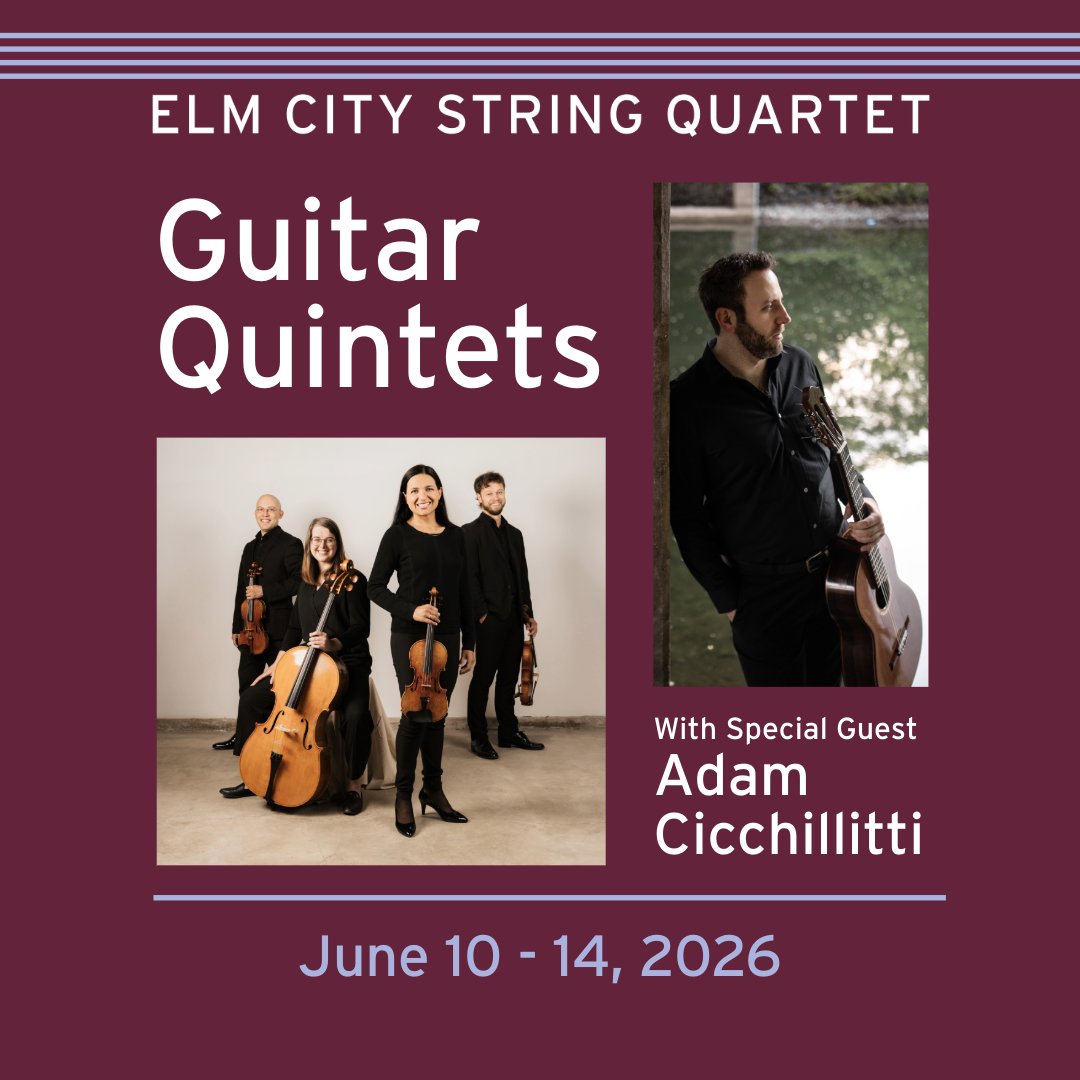
Well folks, our last run of shows for our 2025-26 season is here! We just wrapped a fun weekend of rehearsals with Adam Cicchillitti, full of great music, conversations, puppies and food! While there isn’t a whole bunch of rep written for quartet and guitar, we’ve found some gems that are a blast to play. This is going to be a really fun set of shows — don’t miss this phenomenal musician!
ECSQ Plays Guitar Quintets
Wednesday, June 10, 2026 - 7:30PM | Moncton
Thursday, June 11, 2026 - 7:30PM | Saint John
Friday, June 12, 2026 - 7:30PM | Fredericton
Saturday, June 13, 2026 - 7:30PM | Florenceville-Bristol
Sunday, June 14, 2026 - 7:30PM | St. Andrews
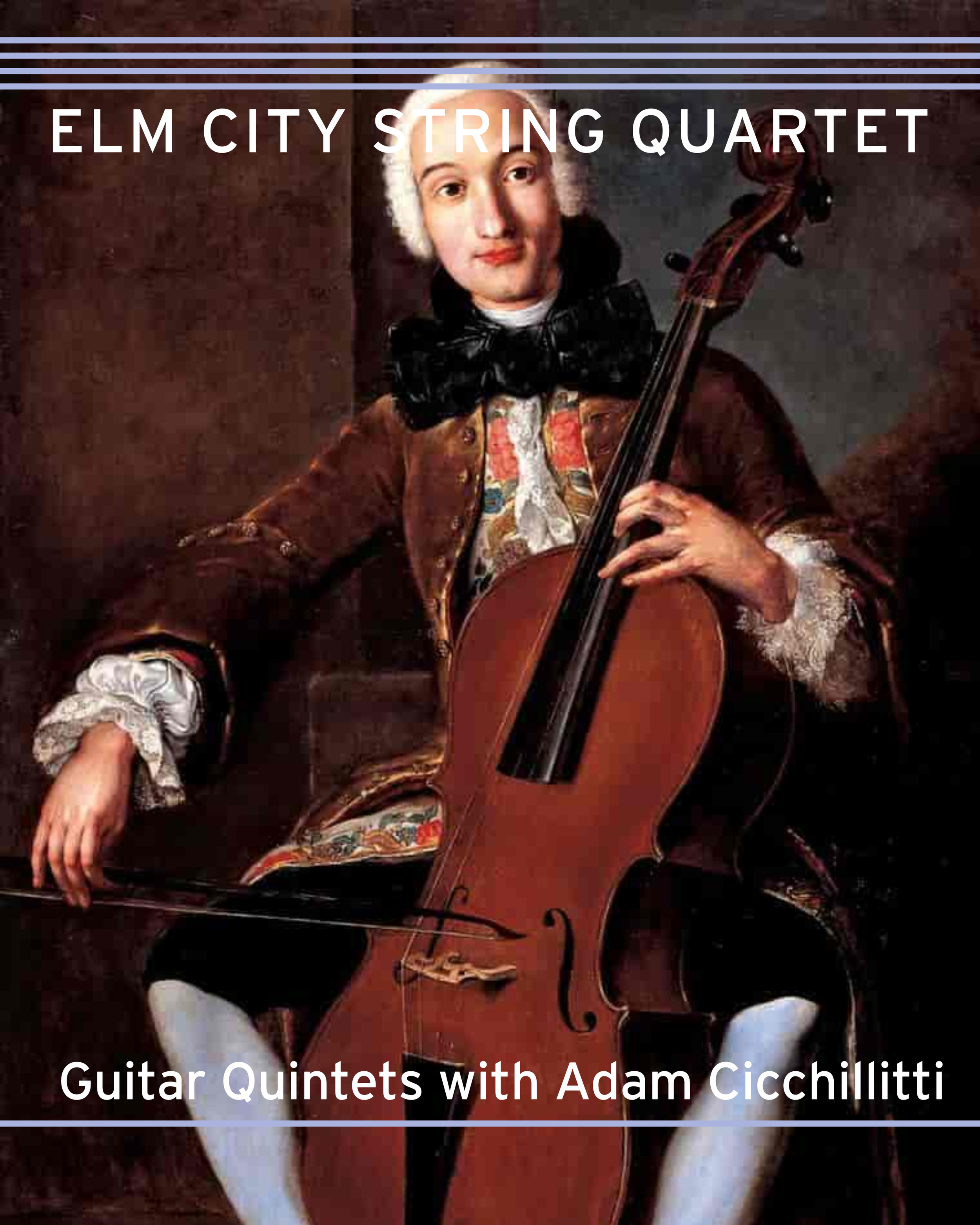
Luigi Boccherini - Quintet No. 4 in D major for Guitar and String Quartet, G. 448, "Fandango"
Italian cellist and composer Luigi Boccherini (1743-1805) achieved widespread recognition in his day both as a virtuoso cellist and as an extremely prolific composer, having written over 350 chamber works. Boccherini was a child prodigy who made his debut in his home town of Lucca at the age of 13 before being carted across Europe to perform. In 1769 he was appointed “virtuoso of the chamber and composer of music” in the court of Infante Don Luis, the brother of the Spanish king. The court in Madrid had an excellent string quartet, and Boccherini conveniently invited himself into the ensemble as a second cellist, creating and composing the very first iterations of a cello quintet.
In 1798 a Spanish nobleman who was an amateur guitarist commissioned him to produce a series of 6 quintets for guitar. While there are many gaps in Boccherini’s catalog due to the Spanish Civil War, the D major Quintet is the only one of the six whose original manuscript remains. The piece was originally part of a string quartet with two cellos, which he recycled and adapted for quartet and guitar. Named after a popular, sensuous two-person dance in 18th-century Spain, the dashing final movement, “Fandango” reflects the impact of Boccherini’s adopted country on his music. Boccherini even adds castanets to the foot-stomping rhythms of “Del Fandango,” making it a true crowd pleaser that has turned it into one of Boccherini’s most popular and enduring pieces.
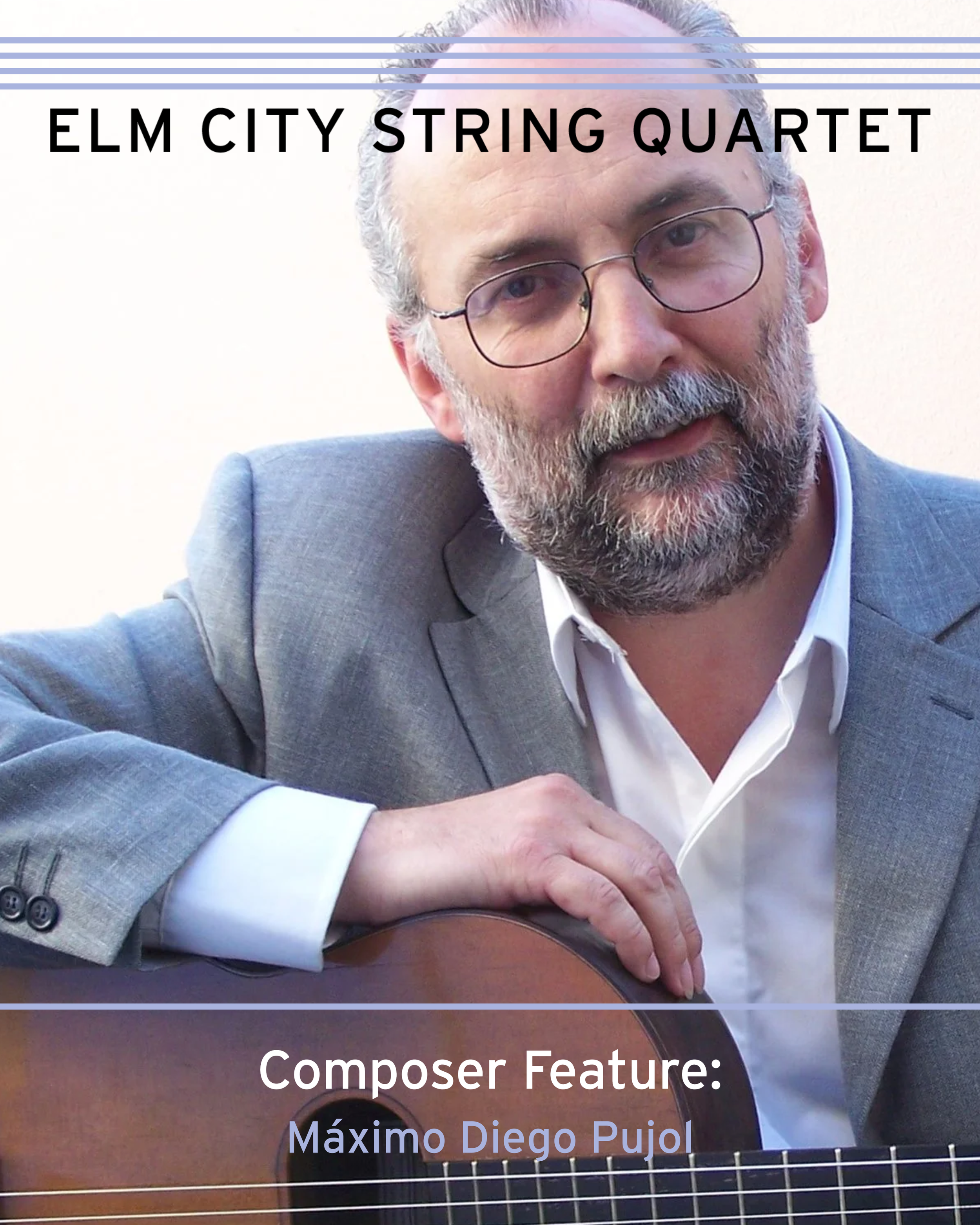
Máximo Diego Pujol - Suite Buenos Aires
Argentinian composer Máximo Diego Pujol (b. 1957), is one of the most widely performed composers for classical guitar today. He studied composition at the Buenos Aires Conservatory of Music, and throughout his studies would spend his evenings playing tango in night clubs. His compositional style is infused with his love for tango and the clear influence of Ástor Piazzolla’s legacy (his homeland's most famous composer of tangos!).
Originally written for guitar and flute, Suite Buenos Aires is a musical tour of his hometown, with each movement depicting one of the four quarters of Buenos Aires by way of the tango. The piece begins in the respective working-class and Italian neighborhoods of Pompeya and Palermo; Pompeya being the part of the city where the tango first became popular, and Palermo its residential area. The piece continues through the fashionable San Telmo, a historic district known for its cafes, clubs, and flea markets. The piece ends in the bustling Microcentro, the city's business and commercial hub in the heart of the city, where you can hear cars honking and people bustling by. Suite Buenos Aires is written in a nuevo tango style, blending traditional tango elements with jazz harmonies and counterpoint, delivering all the romance, nostalgia, and popular appeal of the new tango.
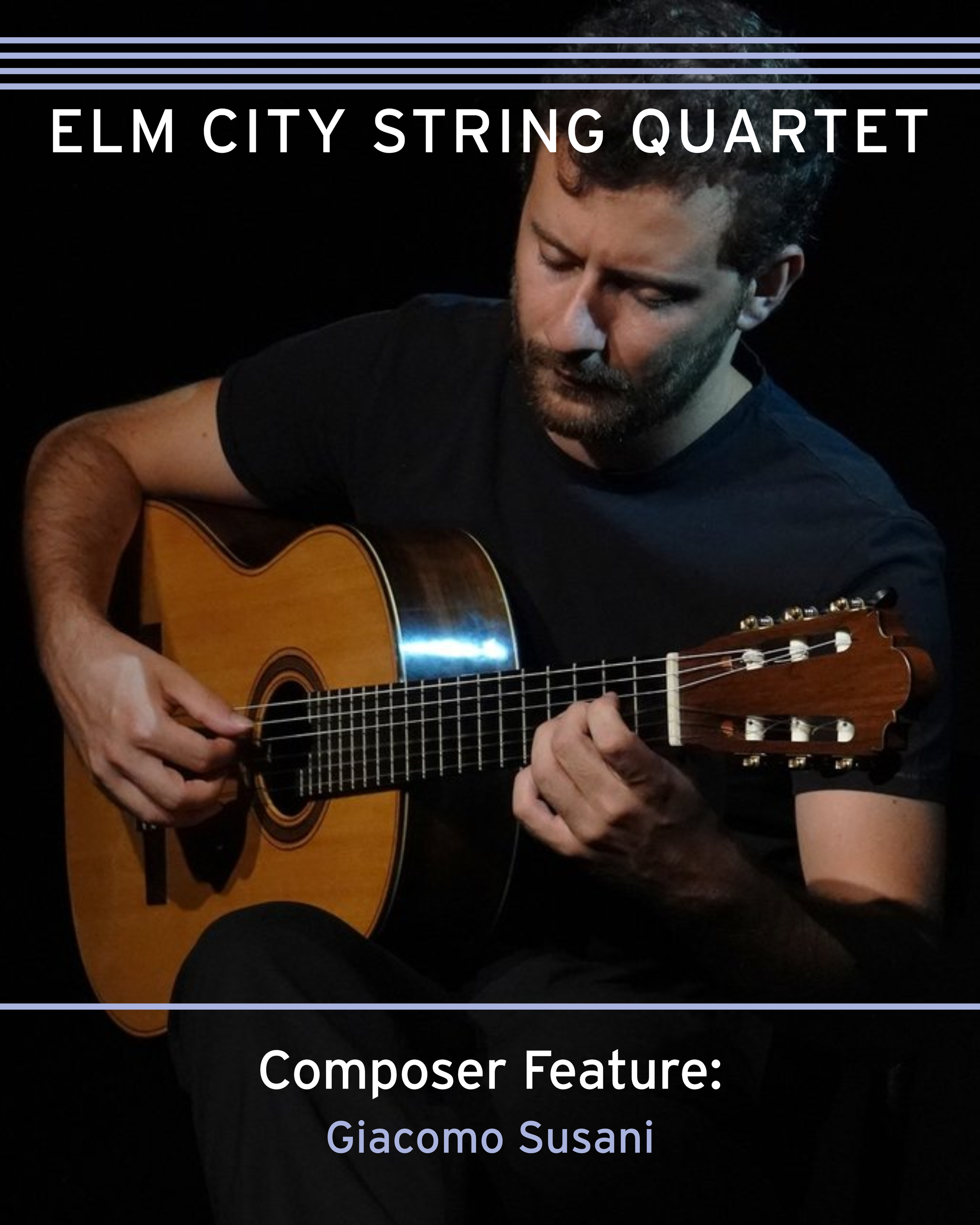
Giacomo Susani - Quintet for Guitar and String Quartet
Giacomo Susani is an Italian - British composer, conductor and guitarist. He was born in Padova in 1995 into a musical family, and has been based in London since 2014. As a composer, his music has been commissioned, performed and recorded all around the world, earning him the prestigious “Respighi Prize” in Composition. Giacomo is a member of the guitar faculty of the Royal Academy of Music in London; as a guitarist he maintains a busy performing career across Europe and the USA, and has won several international awards, including the London International Guitar Competition. Giacomo is artistic director of the “Homenaje” International Guitar Festival (Padova) and co-artistic director and teacher of the Errante Guitar Course in Italy. He studied guitar with Stefano Grondona in Italy and Micheal Lewin in England, composition with Michele Brugnaro, Francesco Antonioni and Stephen Goss.
Susani is known for following in the neo-Romantic footsteps of Italian composer Mario Castelnuovo-Tedesco, known as one of the foremost guitar composers of the 20th century (having written almost 100 works for the instrument!). However, his Quintet for Guitar and String Quartet might remind listeners of Ravel’s String Quartet in F Major, with its impressionistic, extended harmonies that mix melodic modes with whole-tone scales. The hymn-like second movement contains ethereal string-writing, and the third movement, “Omaggio a Castelnuovo-Tedesco,” is an homage that confirms Susani’s link to the Tedesco tradition.
Program
Suite Buenos Aires Máximo Diego Pujol
I. Pompeya
II. Palermo
III. San Telmo
IV. Microcentro
Quintet for Guitar and String Quartet Giacomo Susani
I. La Tempesta
II. Andante
III. Omaggio a Castelnuovo-Tedesco
- Intermission -
Guitar Quintet No. 4 in D major, G. 448, "Fandango" Luigi Boccherini
I. Allegro maestoso
II. Pastorale
III. Grave assai - Fandango