
Get to know the composers: Greer & Debussy
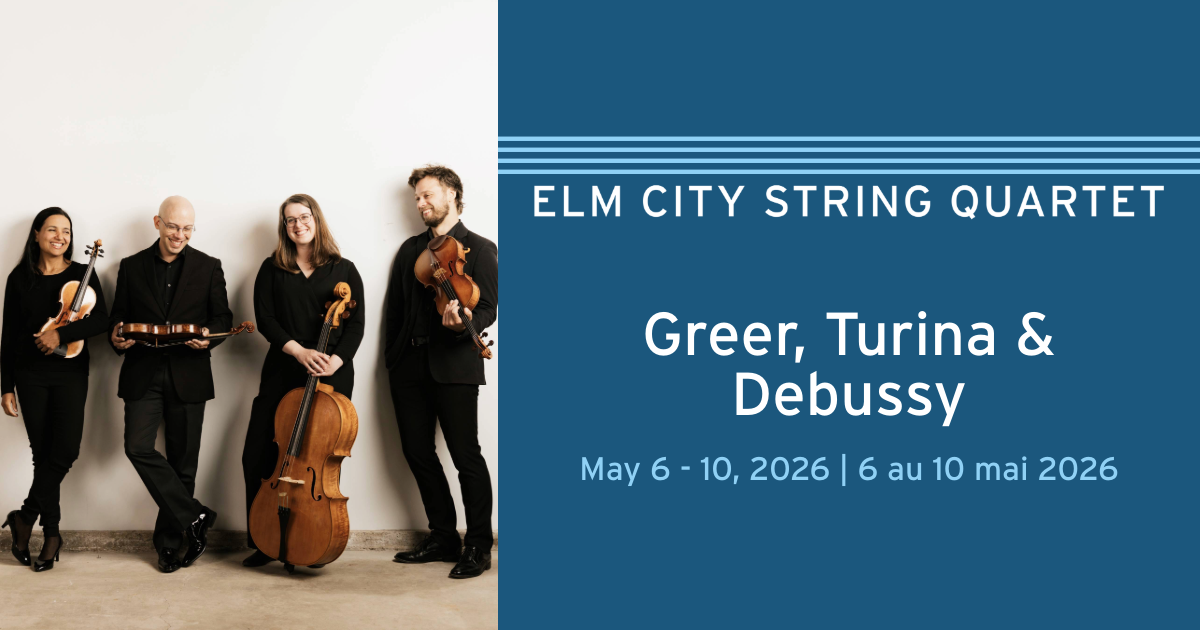
We’ve got a fantastic run of shows coming up this week! Very excited to premiere Zachary Greer’s new string quartet, Continuum. We’ve been workshopping this with Zach since the fall, and we can’t wait for you to hear it. Tickets are still available for all concerts — see you soon!
ECSQ Plays Greer, Turina & Debussy
Wednesday, May 6, 2026 - 7:30PM | Moncton
Thursday, May 7, 2026 - 7:30PM | Saint John
Friday, May 8, 2026 - 7:30PM | Fredericton
Saturday, May 9, 2026 - 7:30PM | Florenceville-Bristol
Sunday, May 10, 2026 - 2:00PM | Caraquet (Saint-Simon) via Musique sur mer en Acadie
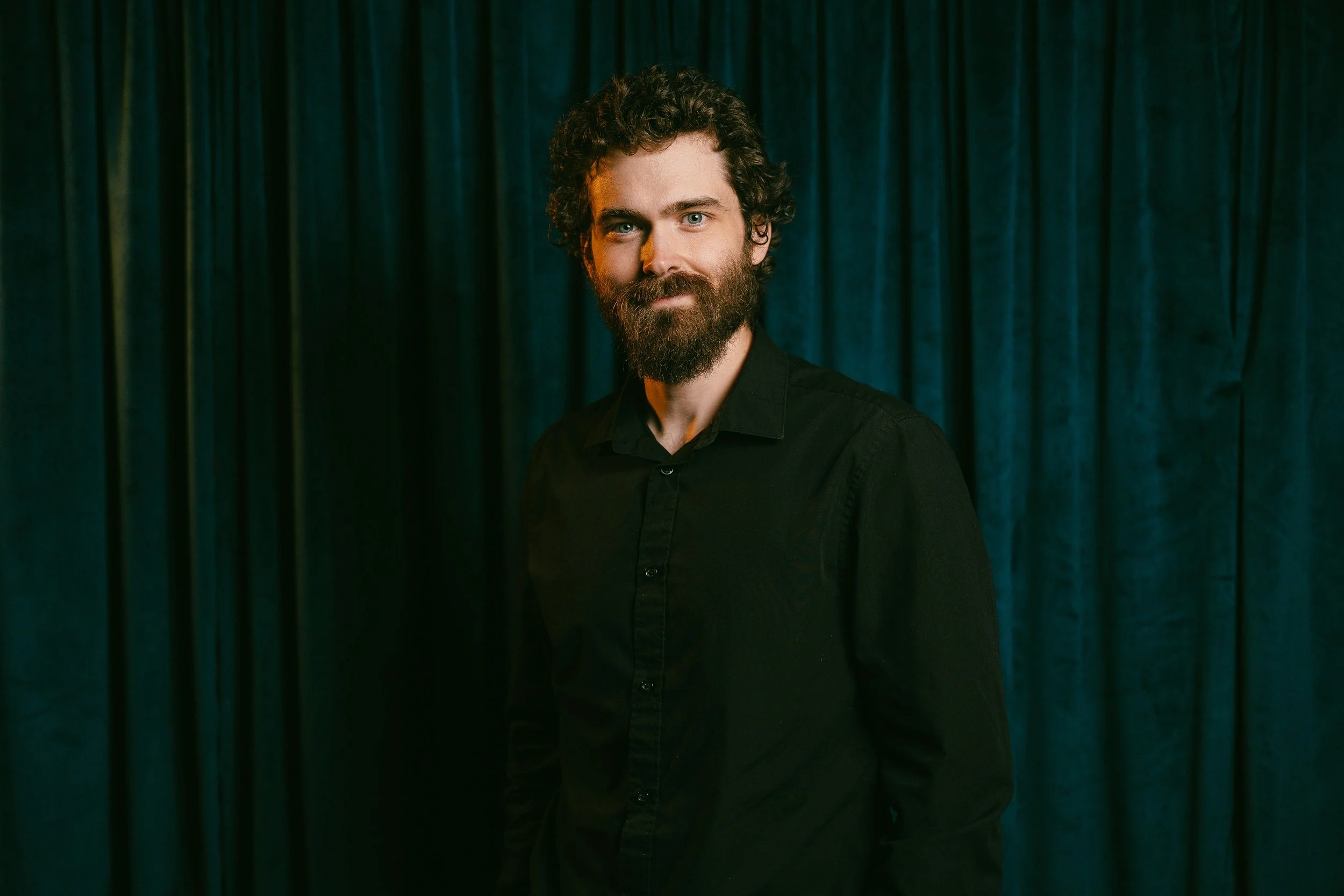
Zachary Greer - Continuum
Zachary Greer is an award-winning Canadian composer for film, television and advertising whose music has resonated with audiences around the world. Known for his emotionally rich and chameleonic style, his work has been featured at major festivals including TIFF and SXSW, and broadcast/streamed on major networks like CBC, APTN, Crave and Superchannel. His feature film credits include What We Dreamed of Then, which premiered at the 2025 Atlantic International Film Festival, Do I Know You From Somewhere? (TIFF 2024), Doin It (starring Lilly Singh) and the sports drama Warrior Strong. On the documentary side, Zachary composed the score for Into The Fray, which earned him the Canadian Screen Music Award for "Best Original Score: Documentary, Factual, Lifestyle & Reality Series or Special" (2025). He also composed additional music for multiple seasons of APTN’s award winning series Yukon Harvest and their new series Coastal Carvings.
A multi-instrumentalist with a core foundation in guitar, Zachary's musical palette spans jazz, blues, folk, and contemporary-classical genres. Zachary holds a Master’s degree in Music Composition from the University of Ottawa, his work blends traditional orchestration with electronic textures, creating rich and evocative sonic landscapes. Though his catalogue of concert music is still in its early stages, his newest work Continuum for string quartet marks a compelling and significant step toward what promises to become a rich and evolving repertoire.
Continuum
For many twentieth-century composers, the string quartet was a uniquely intimate medium through which their most personal thoughts could be expressed. Continuum embraces this sentiment, tracing three pivotal chapters of my life across three movements, each with an unyielding sense of forward motion to mirror the passage of time. The quartet bookends a slower, dramatic inner movement with two faster paced ones, all with a central recurring motif that serves as a unifying thread across the work. The opening movement (Childhood) is a reflection of my upbringing. Youthful energy is established in a galloping 6/8 meter with intertwined voices, suggesting an overlapping stream of memories. A lyrical middle section introduces waves of nostalgia before closing with a variation of the opening material. The dramatic, slower movement (Threshold) commemorates my grandmother, who passed away in 2020 after a battle with dementia. Fragmented versions of the central motif and sudden tonal shifts reflect both the disease and the absence of closure surrounding her death, culminating in a folk-like vamp and abrupt ending. The finale (Birth) reprises the 6/8 meter from the opening movement, but in a scherzo-like character. Rapid textural shifts over a steady pulse evoke the chaotic and anxiety driven experience of my daughter’s birth. Continuous, unresolved builds reach a climactic-sustain played on the violins. Out of their fluttering texture, the viola and cello begin the intimate closing section of the movement, capturing the elated and surreal feeling of seeing your child come into the world. The quartet’s large-scale structure loosely follows a sonata-inspired design: “Childhood” functions as an exposition, “Threshold” as a development, and “Birth” as a recapitulation. Within each movement, however, the musical structures resist convention, reflecting the unpredictability and sudden shifts that shape lived experience. Ultimately, the work aspires to a bifurcated nature: it is both a deeply personal reflection and a work of absolute music, open to interpretation beyond a single narrative. - Z.G.
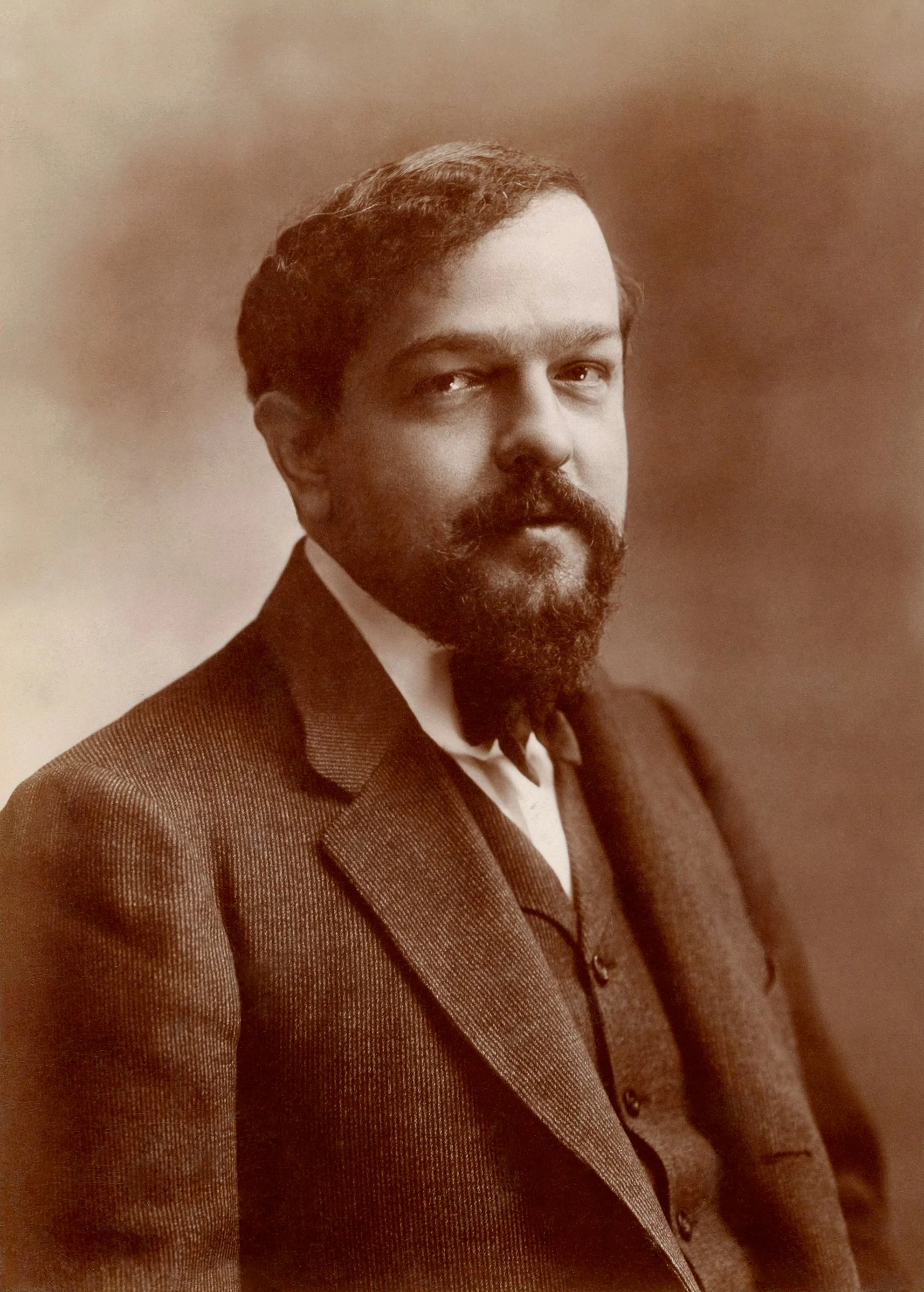
Claude Debussy -
String Quartet in G Minor, Op. 10
Claude Debussy was a French composer often cited as the first Impressionist composer, although he famously rejected the term. Debussy was a child prodigy, and attended the Paris Consevatoire when he was only ten years old. During his latter years at the Conservatoire Debussy incurred the disapproval of the faculty (particularly his composition teacher) for failing to obey the orthodox rules of composition that were popular at the time. Upon graduating, Debussy longed to compose in a style that was distinctly French, as opposed to the more Germanic intellectual and aesthetic ideals of his teachers. His String Quartet in g minor Op. 10, debuted in 1893 by the prestigious Ysaÿe Quartet, is one of his first forays into his new “French” style.
Debussy was 31 when he composed the string quartet. He wanted to live and write “entirely for pleasure,” and to write music whose sole purpose was to be beautiful. He was heavily involved in the arts scene in Paris in the 1890s, and was strongly influenced by the Symbolist poets, the Impressionistic painters, and Javanese gamelan music that he heard performed at the Paris exposition in 1889. Throughout the quartet he uses a “cyclical” compositional method advocated by Franz Liszt – a technique where the opening theme of the first movement is transformed and reappears in various guises in all four movements. The Op. 10 was also the first time Debussy explicitly used musical color (ie: timbre) as a thematic device. When talking about Impressionism in music, Debussy’s use of texture and sonority has often been compared with the Impressionistic painter’s fascination with light: the music flutters and undulates, and his harmonic language is often iridescent.
Debussy optimistically called the work “Premier quatuor” as if he expected more to follow. He did actually begin a second quartet the following year – primarily to please a fellow composer friend who had been disappointed by the Op.10. When he and said “friend” had a falling out, however, Debussy never returned to the project, and so the Op. 10 remains the only quartet in his catalogue of works.
Program
La Oración Del Torero Joaquín Turina
Premiere: Continuum Zachary Greer
- Intermission -
String Quartet in G Minor Op. 10 Claude Debussy
I. Animé et très décidé
II. Assez vif et bien rythmé
III. Andantino, doucement expressif
IV. Très modéré – En animant peu à peu – Très mouvementé et avec passion