
Get to know the composers: Beach, Roumain & Beethoven
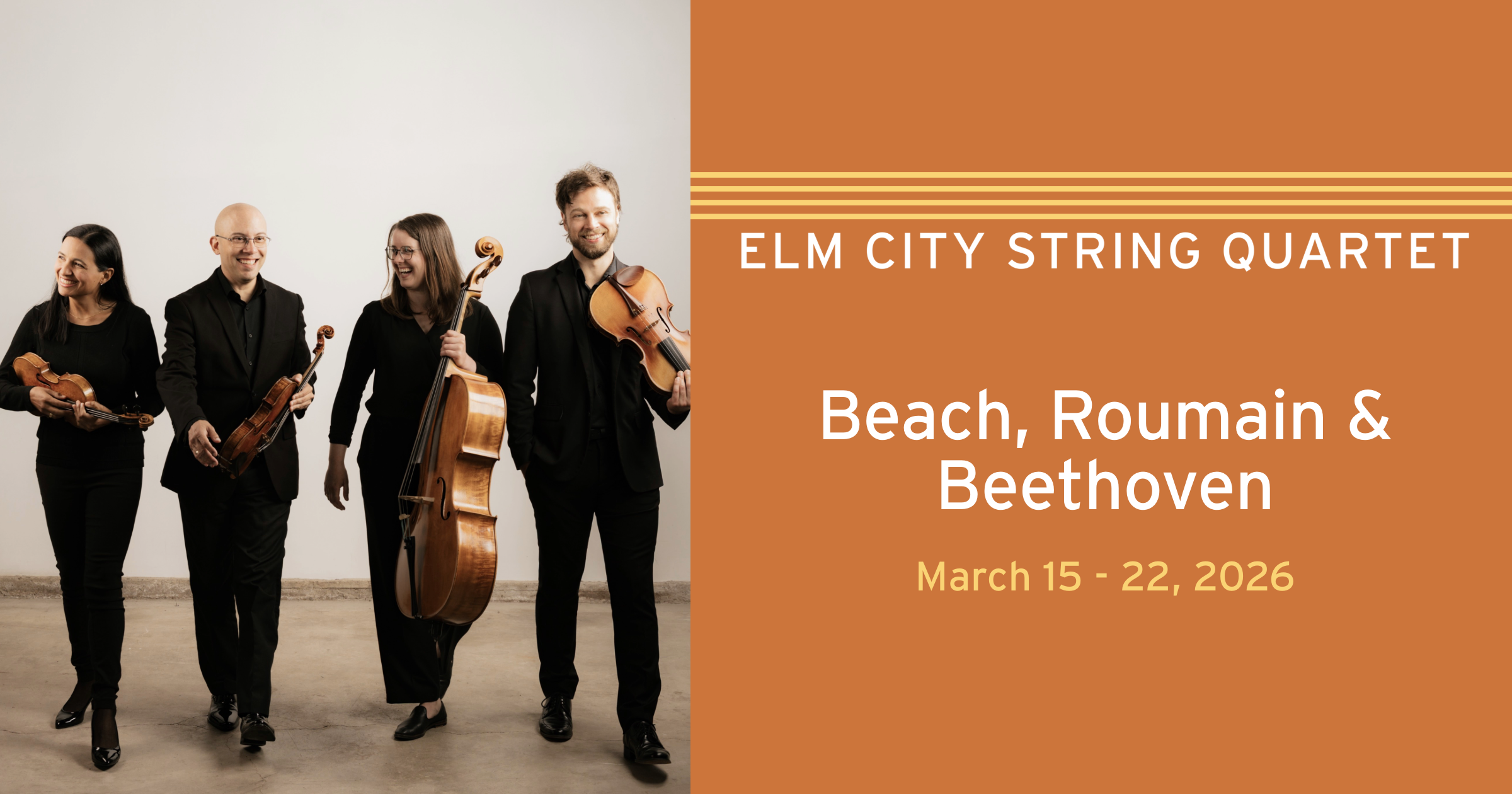
Well folks - this is it! Our first tour of 2026 officially starts today!! Our first show is this afternoon in St. Andrews at 3:00PM. We’ve got a wonderfully varied program to start off 2026 — the show opens with String Quartet in One Movement by Amy Beach, the first American female composer to experience popular and critical acclaim in classical music. String Quartet No. 5 by Daniel Bernard Roumain is dedicated to U.S. civil rights leader Rosa Parks, and the piece traces Parks’ journey of struggle, survival, and lasting legacy. The program concludes with Beethoven’s String Quartet No. 13, a sprawling six-movement masterwork whose finale is the very last piece he ever wrote. More details about each piece are down below!
Tickets are still available for all concerts — see you soon!
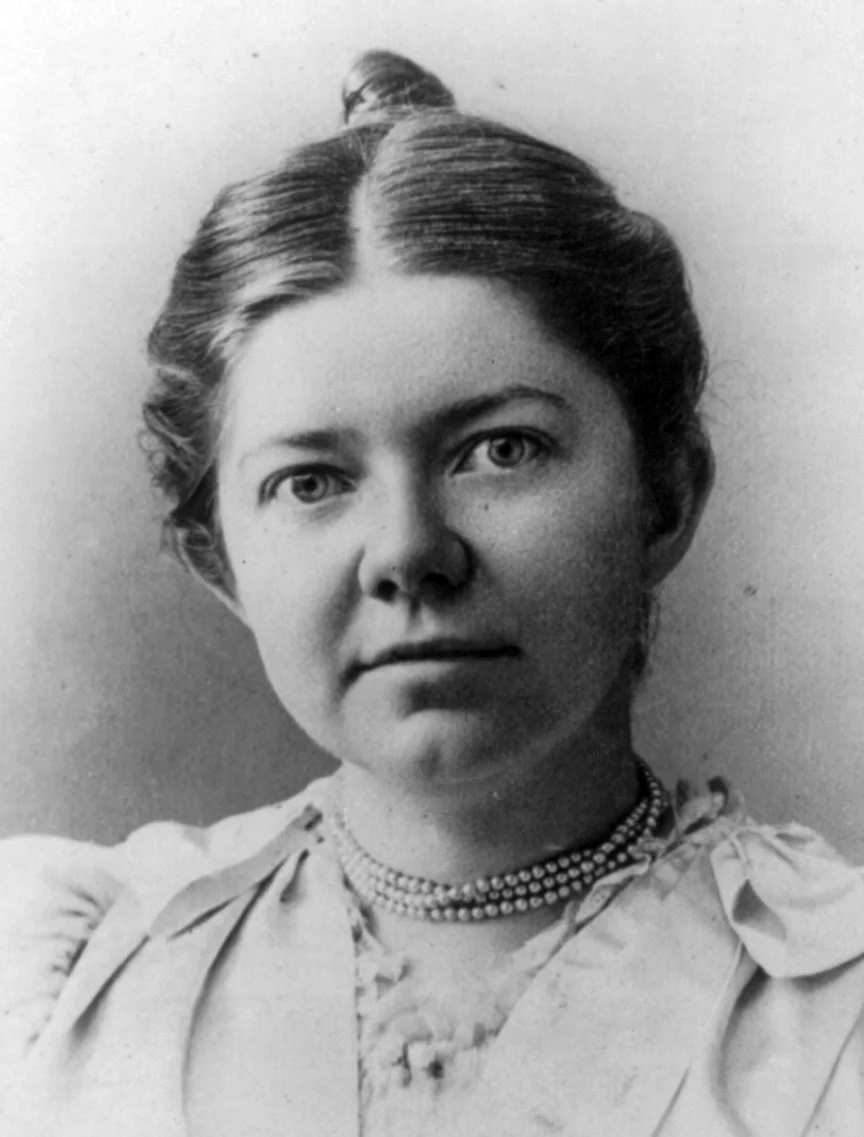
Amy Beach - String Quartet in One Movement, Op. 89
Amy Beach (1867-1944) was an American pianist and pioneering female composer who saw many firsts for women in music. She was the first woman to achieve popular and critical acclaim in classical music in North America, was the first American woman to compose and publish a symphony – and the first to have a symphony performed. She is also one of the first American composers – of any gender – whose musical training occurred wholly within the United States, rather than Europe. As such, she is considered one of the first ‘true’ American composers by scholars, and her approach to composition and her aesthetics helped define a distinctive “American” style to composition.
Born in New Hampshire, she was a child prodigy and had a brief but acclaimed career as a concert pianist before marrying a Harvard surgeon who was 25 years her senior. Dr. Beach enforced strict limits on her musical career – no more than two performances a year as a pianist, and she was not allowed to teach or take private lessons of her own – but he was fully supportive of her continuing her work as a composer (which she was largely self-taught). Undeterred, she developed her own rigorous program of self-education, devouring technical treatises on composition and scores by the great composers.
After Dr. Beach’s death in 1910, Amy resumed her career as a pianist and began to receive greater acclaim for her compositions. Striving to help other women composers, she was a founder and first president of the Society of American Women Composers. She traveled widely, still performing occasionally, and became a champion of musical education in the United States.
In the early 20th century there was a movement in the United States to create music that would reflect a nationalistic sound based on American roots and national identity. Amy Beach composed works inspired by folk music from Scottish, Irish, Balkan, African-American, and Alaskan Inuit origins as an attempt to reflect the diverse backgrounds of the American people. Her one-movement Quartet for Strings, Op. 89 is an example of this - inspired by anthropologist Franz Boas, whose work documented Indigenous musical traditions, the piece uses three Alaskan Inuit melodies from his book as the composition’s primary thematic material: "Summer Song", "Playing at Ball", and "Itataujang's Song." She composed her ‘Quartet for Strings’ over many years, sketching it out in 1921, revising it constantly, to finally complete it in 1929.
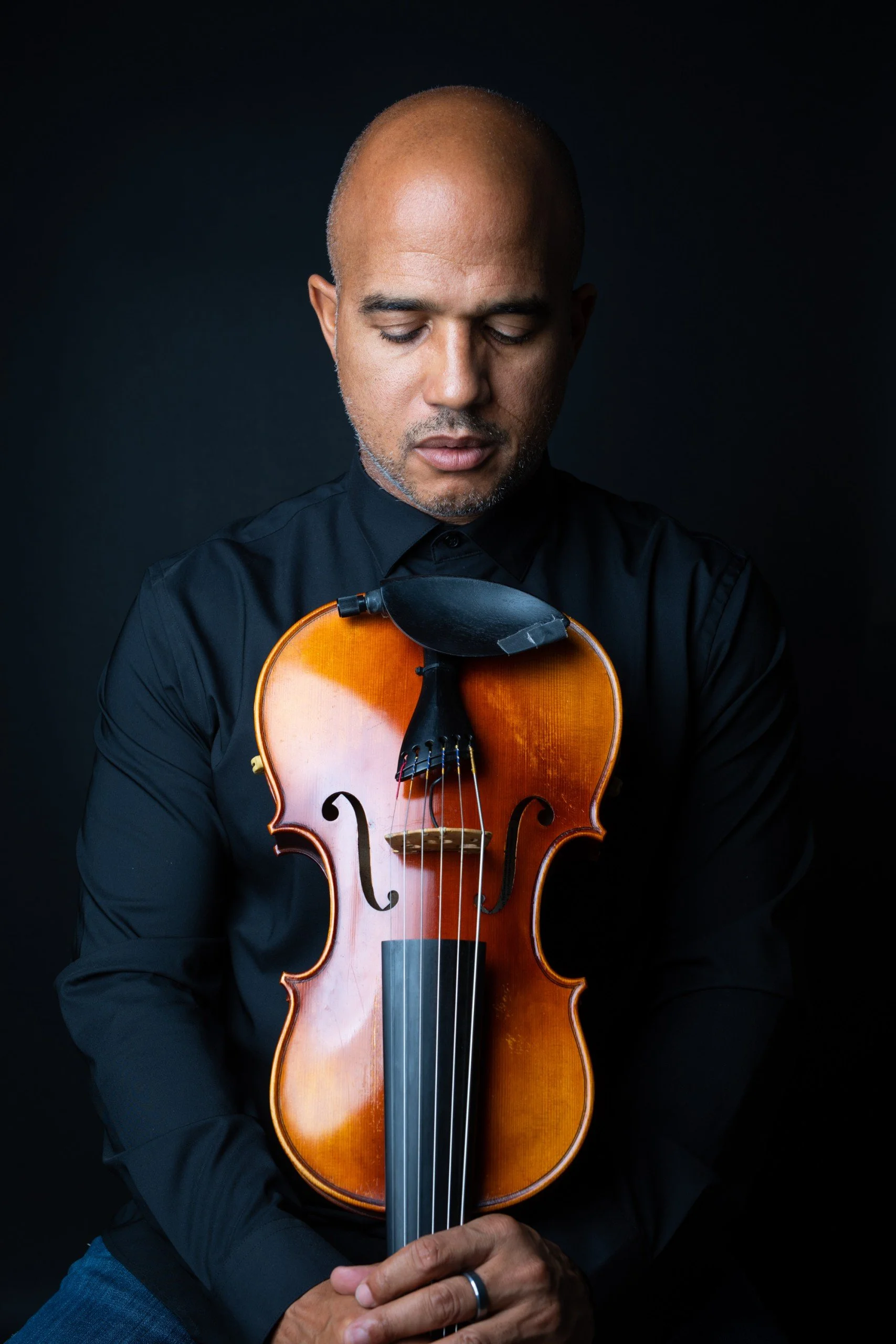
Daniel Bernard Roumain -
String Quartet No. 5 (“Rosa Parks”)
Daniel Bernard Roumain is a Haitian-American composer, violinist, and activist whose music cannot be defined by traditional genre boundaries. He is a prolific and endlessly collaborative composer and performer, known for his signature violin sounds infused with myriad electronic, urban and African-American music influences. “About as omnivorous as a contemporary artist gets” (New York Times), Roumain has worked with artists ranging from J’Nai Bridges and Lady Gaga to Philip Glass and the New York Philharmonic.
His String Quartet No. 5 (Rosa Parks) was written in 2005 and dedicated to the memory of civil rights pioneer Rosa Parks, who passed away during its composition. “As a Haitian-American composer, I was raised by immigrant parents from Haiti, who experienced American life both before, and after, the Civil Rights Act of 1964. Their views were informed by life on a free Island nation in Port-au-Prince, Haiti; life in the suburbs of Chicago, Illinois; and life in the complex diversity of Pompano Beach, Florida. Civil rights, for our household, was global, local, and part of the very fabric of our lives and culture. I created [this work] as a musical portrait of Rosa Parks’ struggle, survival, and legacy. The music is a direct reflection of a dignified resistance. It’s telling that this work may, in fact, be performed on stages that didn’t allow the presence of so many, so often. I often refer to the stage as the last bastion of democracy, where all voices can and should be heard, where we are all equal, important, and necessary.”
When explaining her 1955 decision to refuse to give up her bus seat in a defiant stance against bus segregation, Parks famously said “I knew someone had to take the first step and I made up my mind not to move.” This quote serves as inspiration for the first movement - music that has a driving yet static feel, holding its place, defiant and unapologetic. The second movement, “Klap Ur Hands,” is a joyous celebration of community; inspired by the communal activity of clapping; the movement is a breezy, foot stomping, and literal hand-clapping two-step folk dance full of bluesy string riffs and hip-hop-inspired rhythms.
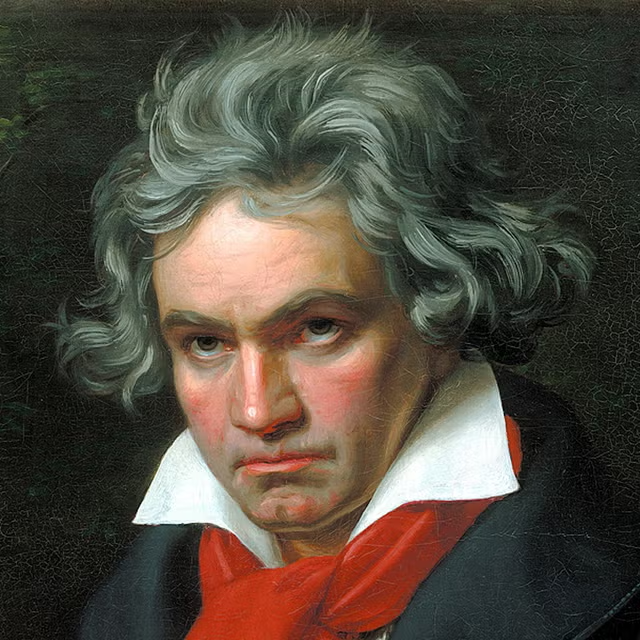
L.V. Beethoven - Quartet No. 13 in
B-flat Major Op. 130
The last few years of Beethoven’s life were predominantly occupied with composing what we now refer to as his late string quartets. It had been 12 years since he had completed a quartet (the F minor Op 95 Serioso), and he may have left it at that if not for a commission request from Prince Nicholas Galitzin, an excellent young amateur cellist from St Petersburg, living in Vienna (though it’s said that he never ended up paying Beethoven – terrible arts supporter!).
The Op. 130 quartet is marked by profundity, elegance, and humour, and sheds light on Beethoven’s state of mind during the last few months of his life. He had just finished his famous Ninth Symphony, and was basking in the positive success he was receiving after its premier - resulting in a flood of new business offers, and the remarkable feeling of almost limitless creative power. Career success was contrasted by his rapidly declining health, and an extremely stressful family situation involving his 18-year old nephew which came to an explosive head during this time (including confrontations and personal threats by both uncle and nephew).
He completed Op. 130 in November 1825; clocking in at over 40 minutes in length, the 6-movement piece as a whole was completely unprecedented in its time. On the evening of the premiere, Beethoven spent the night in a tavern, waiting for news on how the quartet was received. The audience liked it overall (they demanded encores of the 2nd and 4th movements) but were left shocked by the last movement, the Grosse Fuge. Unhappy that the final movement wasn’t well received, Beethoven allegedly called the audience & critics “Asses, cattle!” But even by today’s standards the Grosse Fugue sounds contemporary and is challenging to play.
Gossip about its difficulty and strangeness began to circulate around Vienna, alarming Beethoven’s publisher who grew concerned that he wouldn’t be able to sell Op. 130 with the Grosse Fugue as the quartet's finale. He enlisted Beethoven’s friends to try and convince him to write an easier final movement, offering to pay Beethoven an additional fee and to publish the Fugue separately. Six months later, Beethoven uncharacteristically obliged with a new and uncontroversial last movement – the very last piece of music that he composed before his death – which is the movement we will be playing today.
Program
Quartet for Strings in One Movement, Op. 89 Amy Beach
String Quartet No. 5, “Rosa Parks” Daniel Bernard Roumain
I. I made up my mind not to move
II. Klap Ur Handz
- Intermission -
String Quartet No. 13 in B-flat major, Op. 130 Ludwig van Beethoven
I. Adagio ma non troppo - Allegro
II. Presto
III. Andante con moto, ma non troppo. Poco scherzoso
IV. Alla danza tedesca. Allegro Assai
V. Cavatina. Adagio molto espressivo
VI. Finale: Allegro